Teaching Mathematical Design
This post was originally a Twitter thread. See also creating the course and a talk about it.
I am so excited to teach Mathematical Design!! It’s a class for non-math majors focusing on the creative and artistic aspects of functions. We lean heavily on @Desmos for the learning and exploration and on @EMSL Axidraw machines in the @qcmakerspace to realize student artwork.
Looking forward to sharing what my students create this semester and sharing an OER curriculum for replication at other institutions.
After building point, lists, graphing, and translation skills in @Desmos, we talked last week about intentionality in art. Today we introduced students to the @qcmakerspace and the @EMSL AxiDraw machines. Next up - Exploration, design, and development. 🎉🎉🎉
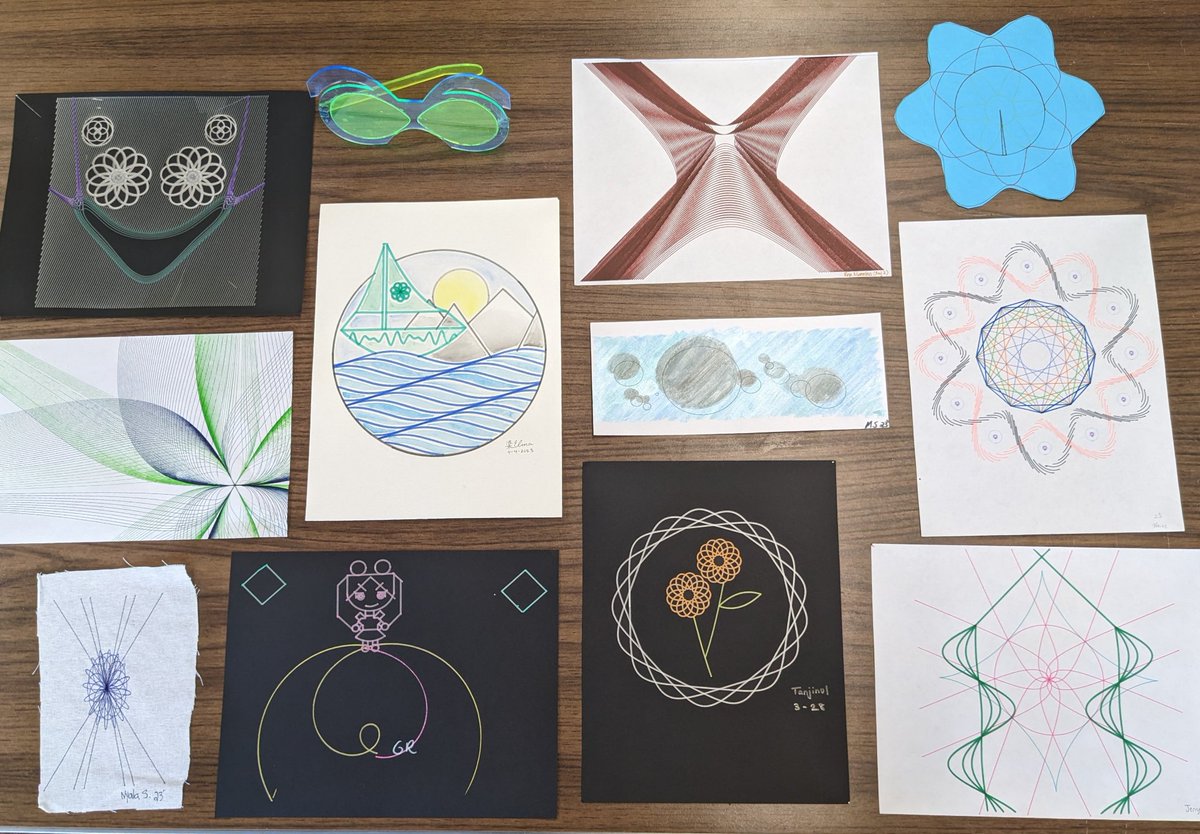
The first project was due last week and here are some of my students’ artwork. I am so proud of them!
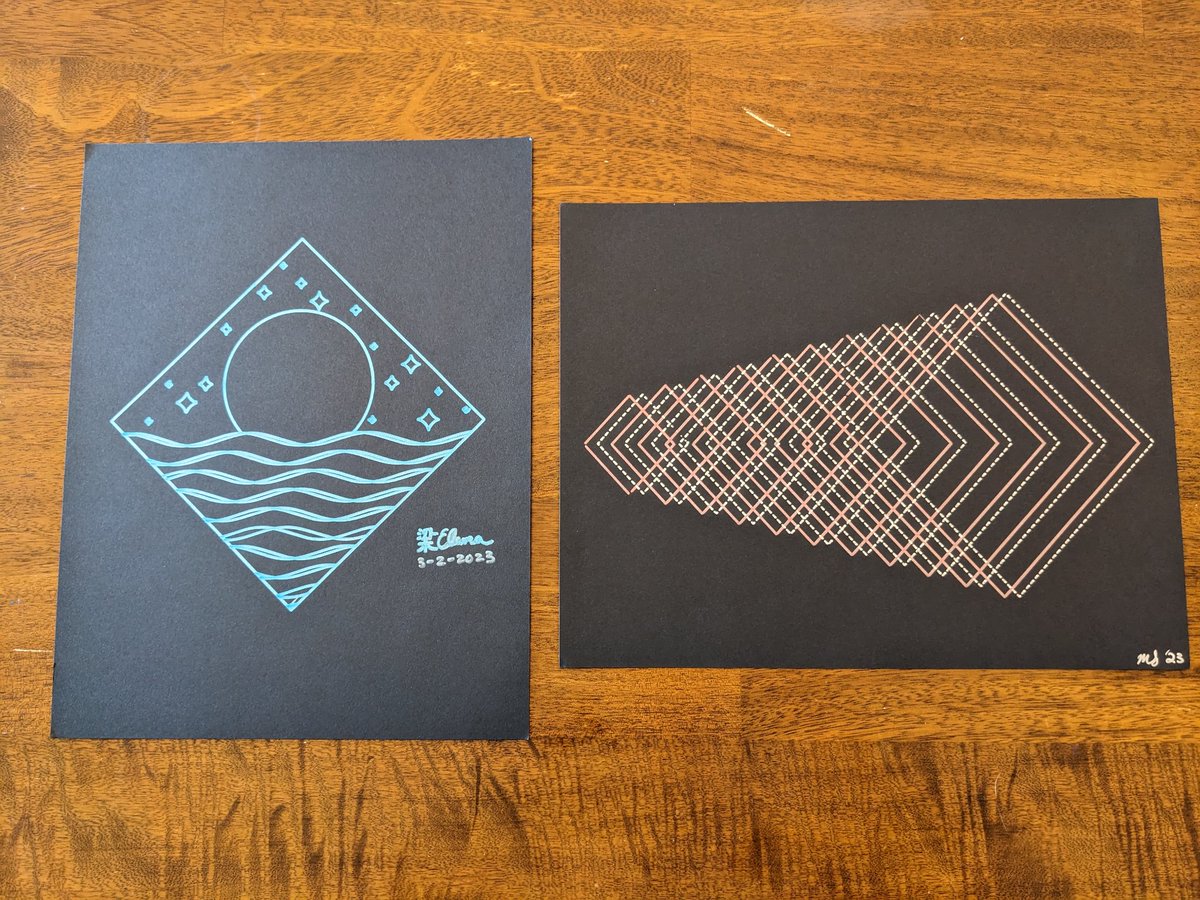
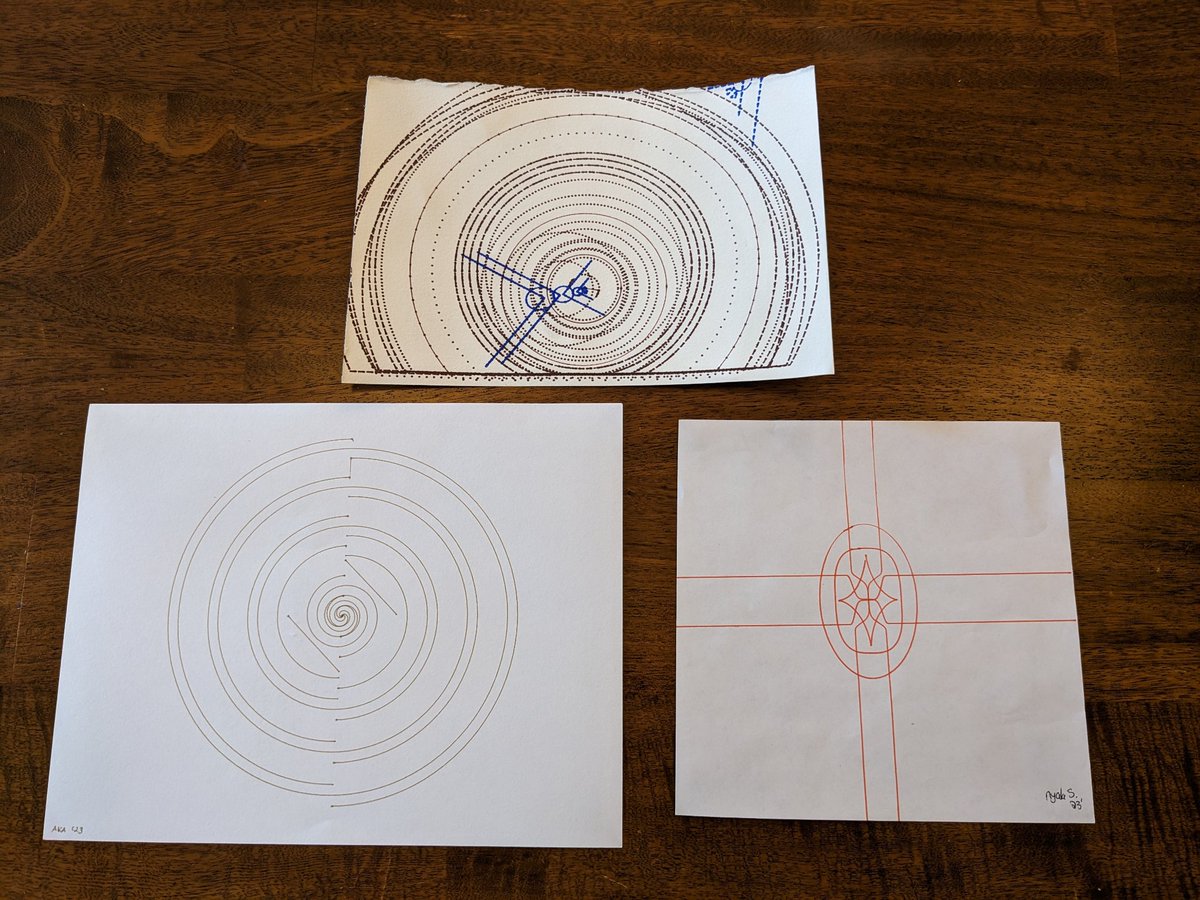
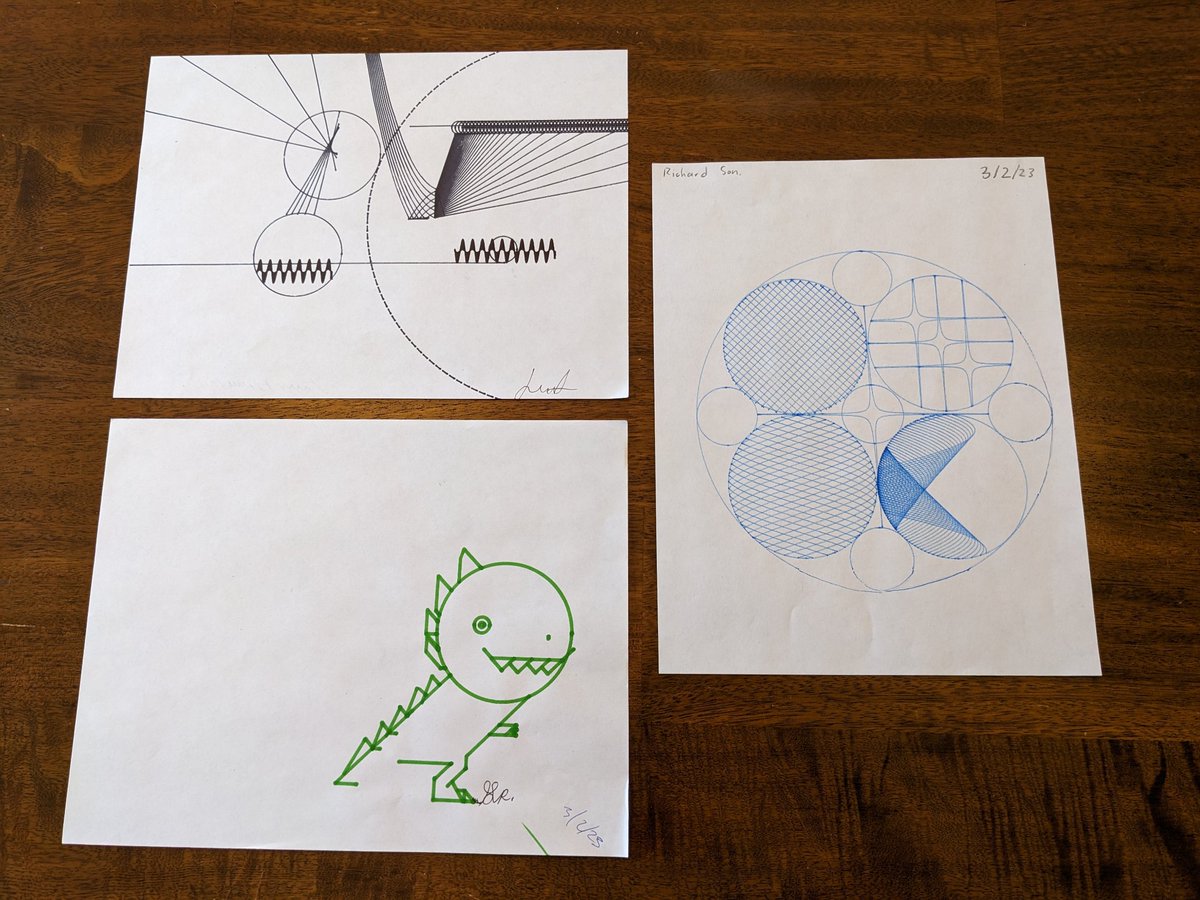
The stealth @Desmos command that was extremely powerful was the function to restrict the output of a graph. Not only can you use it to restrict the domain of a variable {-2<x<2}, you can use it to restrict the graph to lie in a particular region {x²+y²<4}.
Shout out to the @qcmakerspace, @EMSL, and @inkscape for making it all possible. Next we start work on dilations and then polar plotting.
Finally getting to read my students’ lab reports about their process. One student writes “This is the first time I have ever enjoyed and had fun in a math class” 🥰
Another student writes “Collaborating with peers has provided me with different perspectives and ideas, making it possible for me to approach the challenges in a more innovative and effective way and come out with this final piece.”
Another student writes “The experience I had with this Axidraw machine was quite a remarkable experience. Yes I had some trials and tribulations along the way, but the end result is amazing. … The reality that a machine can make math and art come together is wonderful.”
I just installed the artwork in a display in the @QC_News Math Department. The second project is well on its way.
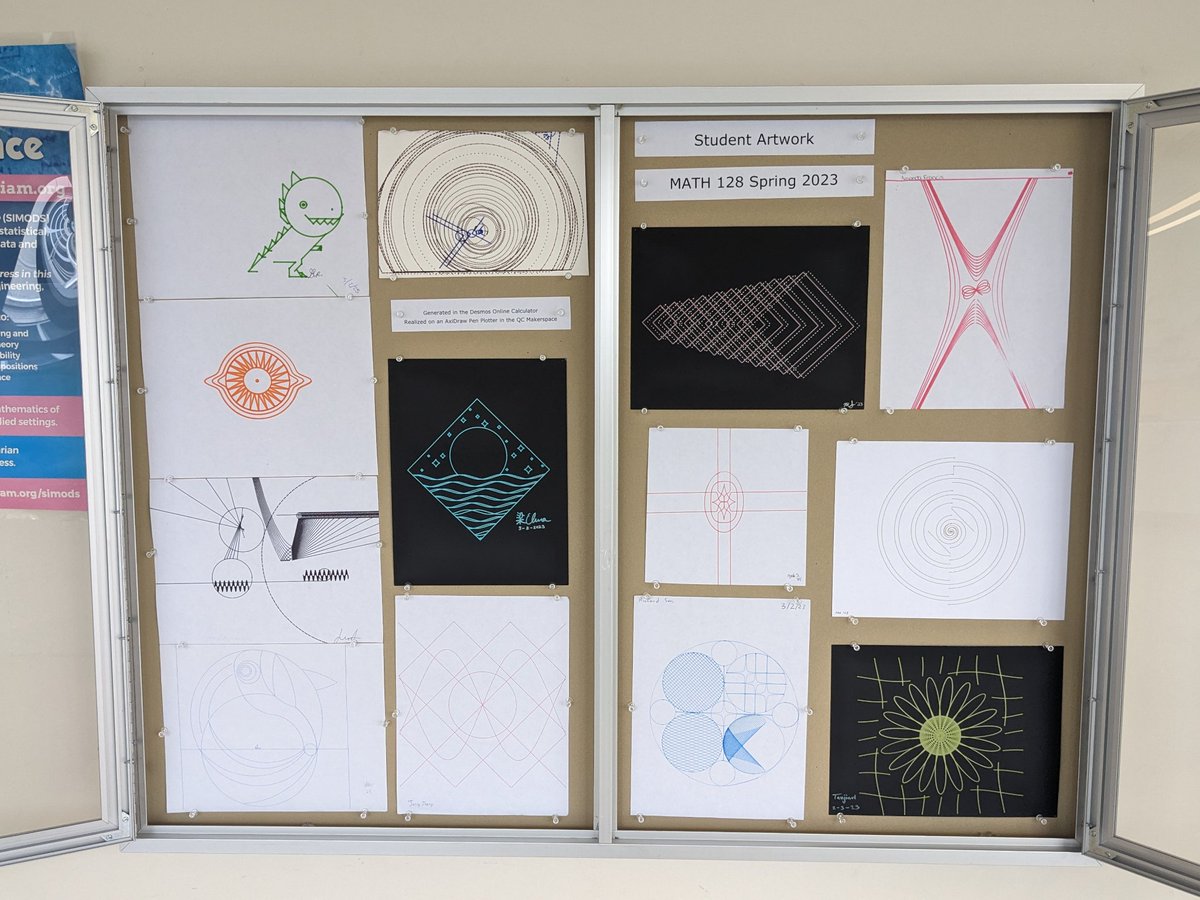
The second module of the class is on dilations, combining functions (+ × ⚬), and polar functions. The focus of the second project is to use more advanced mathematical techniques and being intentional with materials on the AxiDraw.
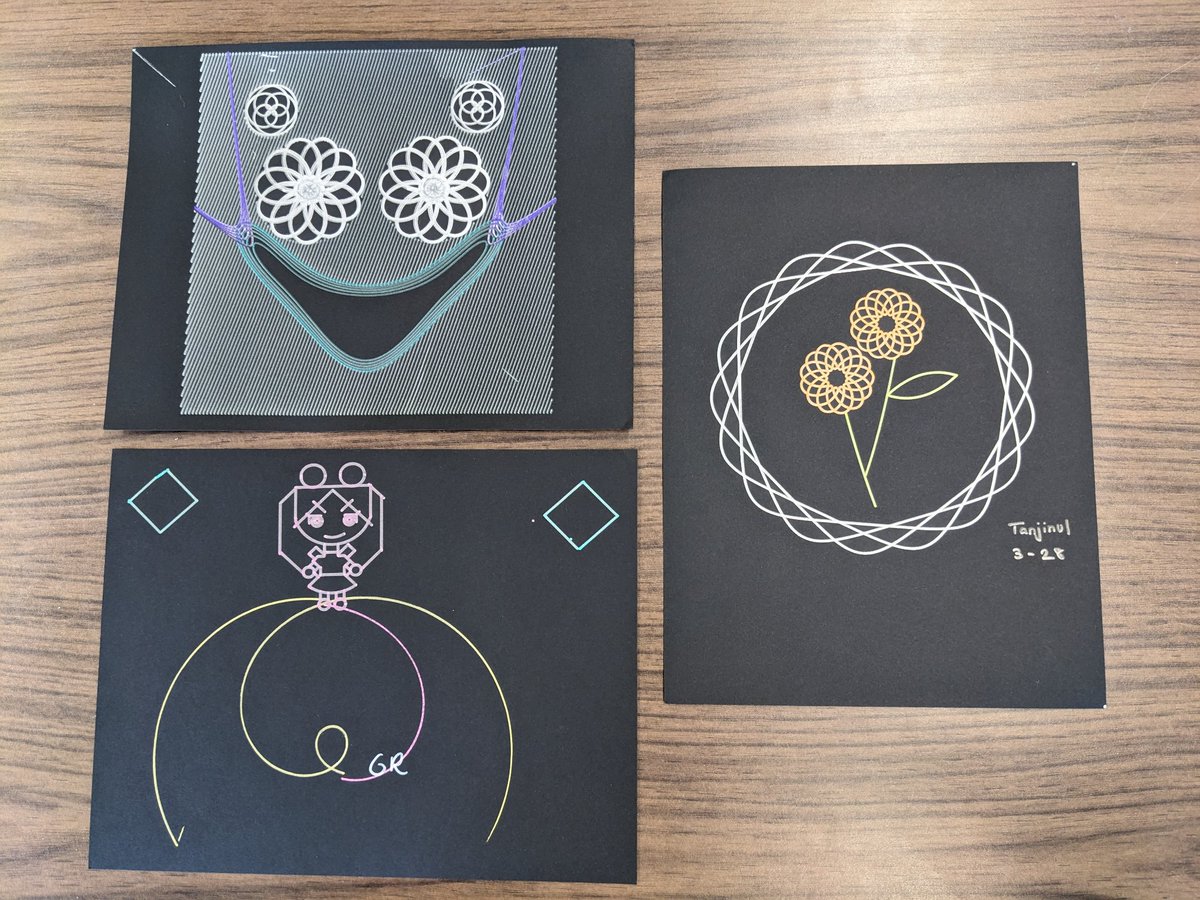
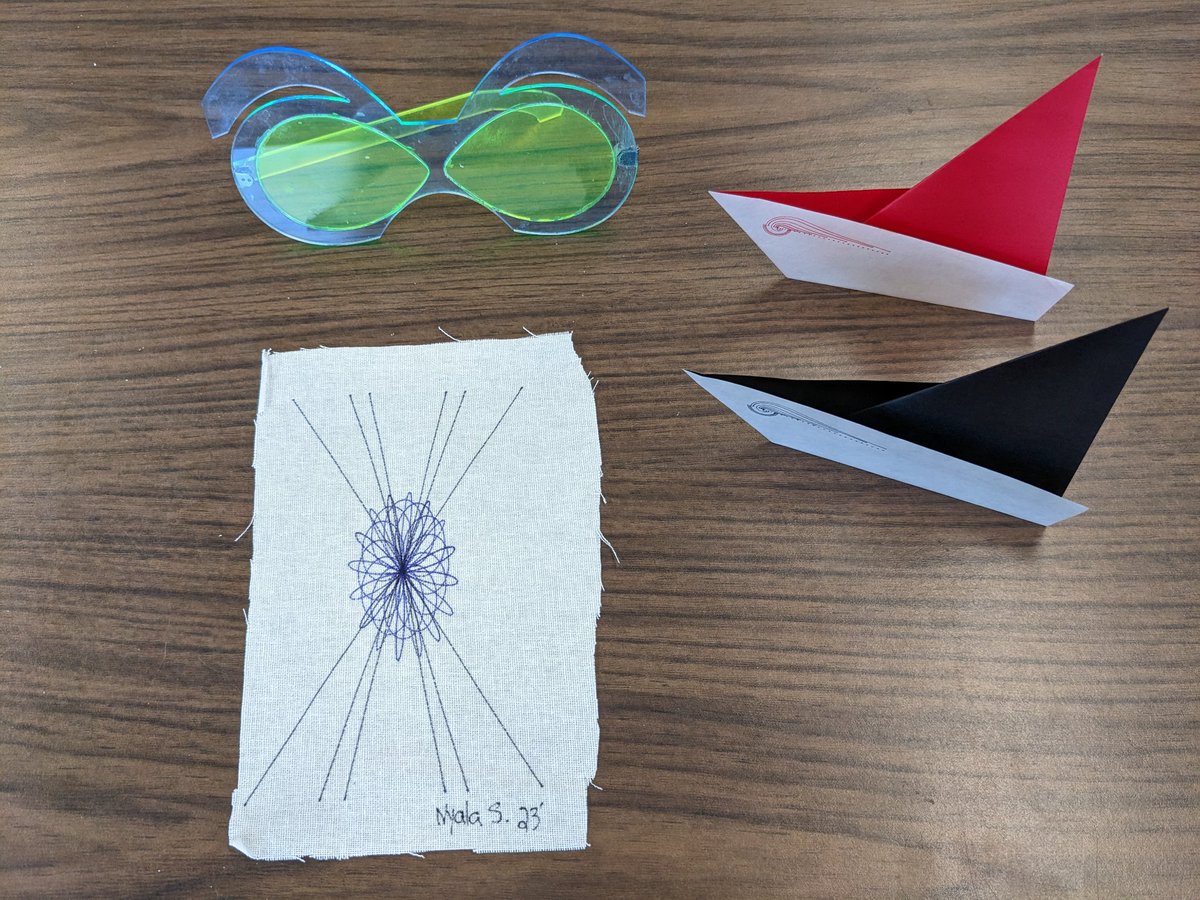
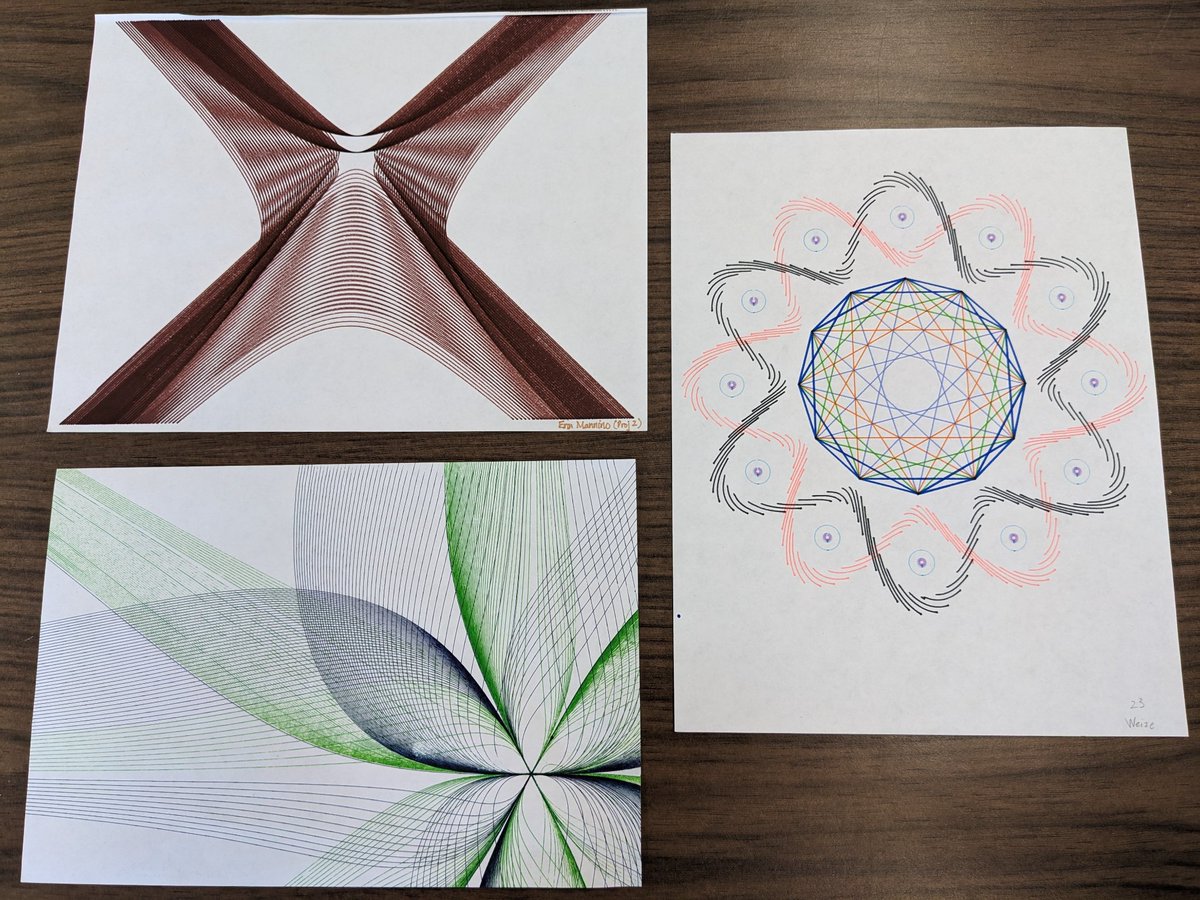
Here are the second projects. Students were asked to push their mathematical skills, their @Desmos programming skills, and their @EMSL Axidraw technical skills further. You can see that they took this mandate seriously!
For example, these students developed techniques to draw their designs with multiple colors on a dark background.
These students explored a different medium for their designs.
These students pushed the limits of their mathematical expressions.
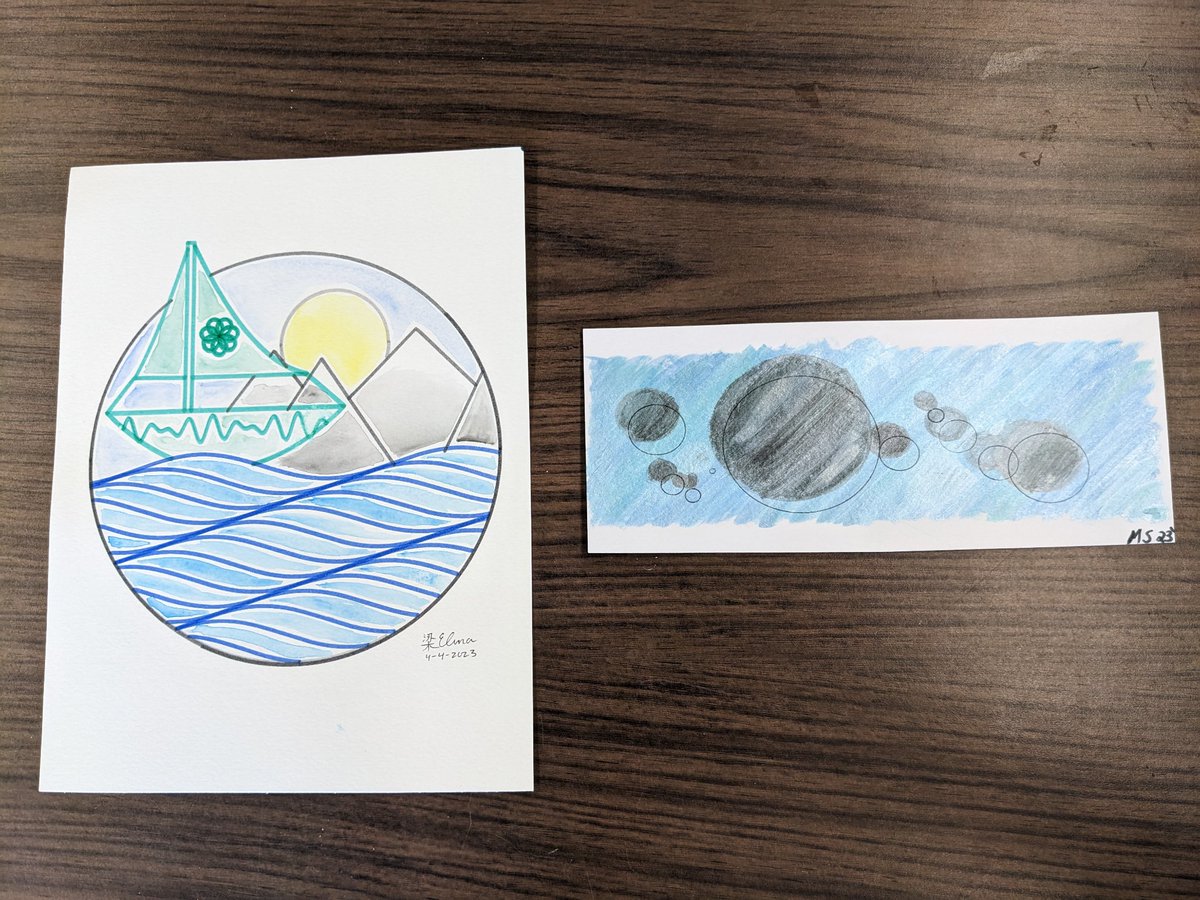
And these students decided to work with watercolors! The watercolor was added to the piece on the left after the initial drawing was made, and in the piece on the right, the AxiDraw drew the design directly with a paintbrush!
Citation
@online{hanusa2023,
  author = {Hanusa, Christopher R. H.},
  title = {Teaching {Mathematical} {Design}},
  date = {2023-01-25},
  url = {https://hanusa.xyz/blog/posts/2023-01-25-teaching-mathematical-design/},
  langid = {en}
}