Alternating Billiards
math
A new version of billiards where the ball bounces by alternating between two fixed directions, from my research on placements of chess pieces.
This post was originally a Twitter thread.
I am excited to share with you an article that I posted to the arXiv today. My collaborator and I worked on an interesting question related to my long-running research in counting placements of chess pieces. 1/3
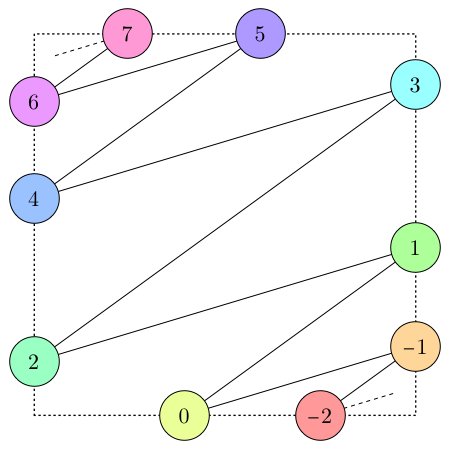
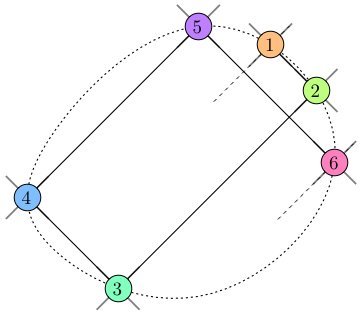
We ended up creating a new version of billiards with a different rule for bouncing off a wall: instead of obeying the law of reflection, the ball “bounces” by alternating between two fixed directions.
I’m very pleased by its arXiv number: https://arxiv.org/abs/1901.01917
Even if you don’t read it for its math, do check out our pictures. :)
Oh, and here are two pictures. (4/3)
Citation
BibTeX citation:
@online{hanusa2019,
  author = {Hanusa, Christopher R. H.},
  title = {Alternating {Billiards}},
  date = {2019-01-08},
  url = {https://hanusa.xyz/blog/posts/2019-01-08-alternating-billiards/},
  langid = {en}
}
For attribution, please cite this work as:
Hanusa, Christopher R. H. 2019. “Alternating Billiards.”
January 8. https://hanusa.xyz/blog/posts/2019-01-08-alternating-billiards/.